
CBD Oil News
Medical Marijuana Just Got Reclassified: What This Actually Means (And Why It Matters)
Apr
Something big just happened in the cannabis world… and most people don’t fully understand it yet.
The federal government has officially reclassified medical marijuana as a less dangerous drug. And while headlines make it sound like legalization, that’s not exactly what this is.
But it is a massive shift.
Let’s break it down simply and honestly so you can understand what this means for you, for the industry, and for the future of CBD.
What Actually Changed
Under a new federal order, state-licensed medical marijuana has been moved from Schedule I to Schedule III under the Controlled Substances Act.
That might sound technical, but here’s why it matters:
- Schedule I = “no accepted medical use” (this is where heroin and LSD sit)
- Schedule III = recognized medical use + lower potential for abuse
For the first time, the federal government is officially acknowledging that cannabis has medical value.
That’s a huge deal.
What Did Not Change
Let’s keep this grounded in reality:
- Marijuana is still illegal at the federal level
- Recreational cannabis is still classified as Schedule I
- This only applies to state-licensed medical marijuana programs
So no, this isn’t full legalization.
But it’s a very real step in that direction.
Why This Is Such a Big Moment
This shift changes how cannabis is viewed at the highest level of government.
Here’s what that unlocks:
1. Research Finally Opens Up
For years, cannabis research has been heavily restricted.
Now:
- Scientists can study cannabis more freely
- Researchers won’t be penalized for using state-legal products
This means we’re going to learn a lot more about how cannabinoids actually work in the body.
2. Major Tax Relief for Cannabis Businesses
This is one of the biggest behind-the-scenes changes.
Previously:
- Cannabis companies couldn’t deduct normal business expenses
Now:
- Medical marijuana businesses can write off expenses like any other company
That alone could reshape the industry.
3. Better Access to Healthcare Integration
Schedule III drugs can be:
- Prescribed (in certain forms)
- Studied in clinical settings
- Integrated into medical care
This creates a pathway for cannabis to move closer to traditional medicine.
4. A Shift in Public Perception
When something moves out of the same category as heroin, people notice.
This change:
- Reinforces cannabis as a wellness tool, not just a recreational substance
- Aligns federal policy closer to what most states already recognize
What Happens Next
This isn’t the end. It’s the beginning.
The federal government is now:
- Launching a formal review process to potentially reclassify cannabis more broadly
- Considering future policy changes beyond just medical programs
Translation: more change is coming.
What This Means for CBD (This Part Matters)
Even though this ruling is about marijuana, it directly impacts the entire hemp and CBD space.
Here’s how:
Increased Legitimacy
This reinforces what many of us already know:
Cannabis compounds have real therapeutic value.
That benefits:
- Full-spectrum products
- Hemp-derived CBD
- Brands focused on education and quality
More Scientific Validation
As research expands, we’ll see:
- Better dosing clarity
- Stronger clinical backing
- More trust from consumers
A More Educated Market
People are starting to ask better questions:
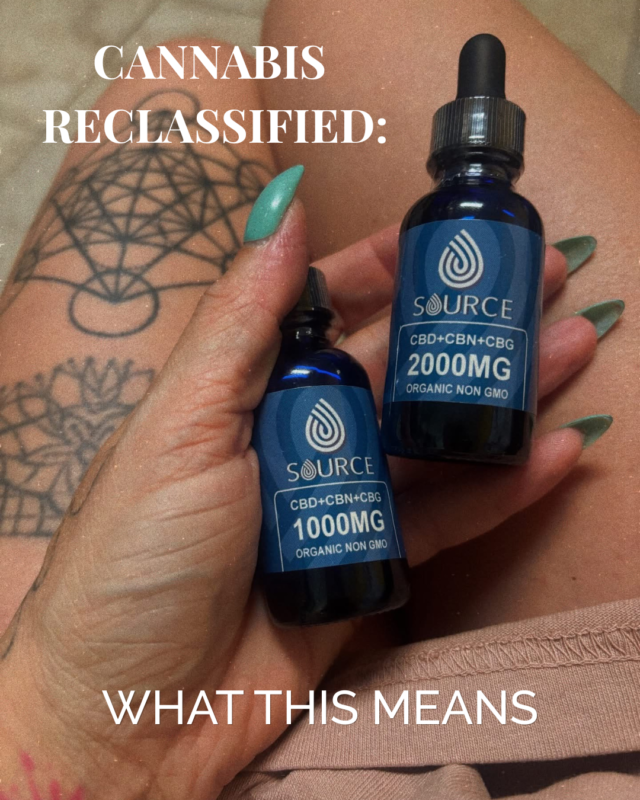
That’s where brands like Source CBD stand out.
The Bottom Line
This isn’t legalization.
But it is one of the most important shifts in cannabis policy in decades.
For the first time, the federal government is:
- Acknowledging medical value
- Reducing restrictions
- Opening the door for research and growth
And that changes everything.
From Us to You
At Source CBD, this is exactly why we’ve always led with education first.
Because trends come and go. Headlines change.
But truth doesn’t.
And the truth is this:
Nature has always had the answers. Science is just catching up.
